DEACON

AI customer support agent and user insights, built for founders

Deacon answers your customers in seconds, from your own docs, so the same questions stop pulling you away from building. When it doesn’t know, it says so instead of making something up. And every question it hears shows you what customers are stuck on and what they want next.

Free plan, no card. Paid plans from $40 a month, billed yearly.
The Deacon widget answering a customer, in English and then in Spanish, handing over a question it cannot answer, the founder answering it once, and the analytics that follow.

Answers from your docs, or an honest “I don’t know”

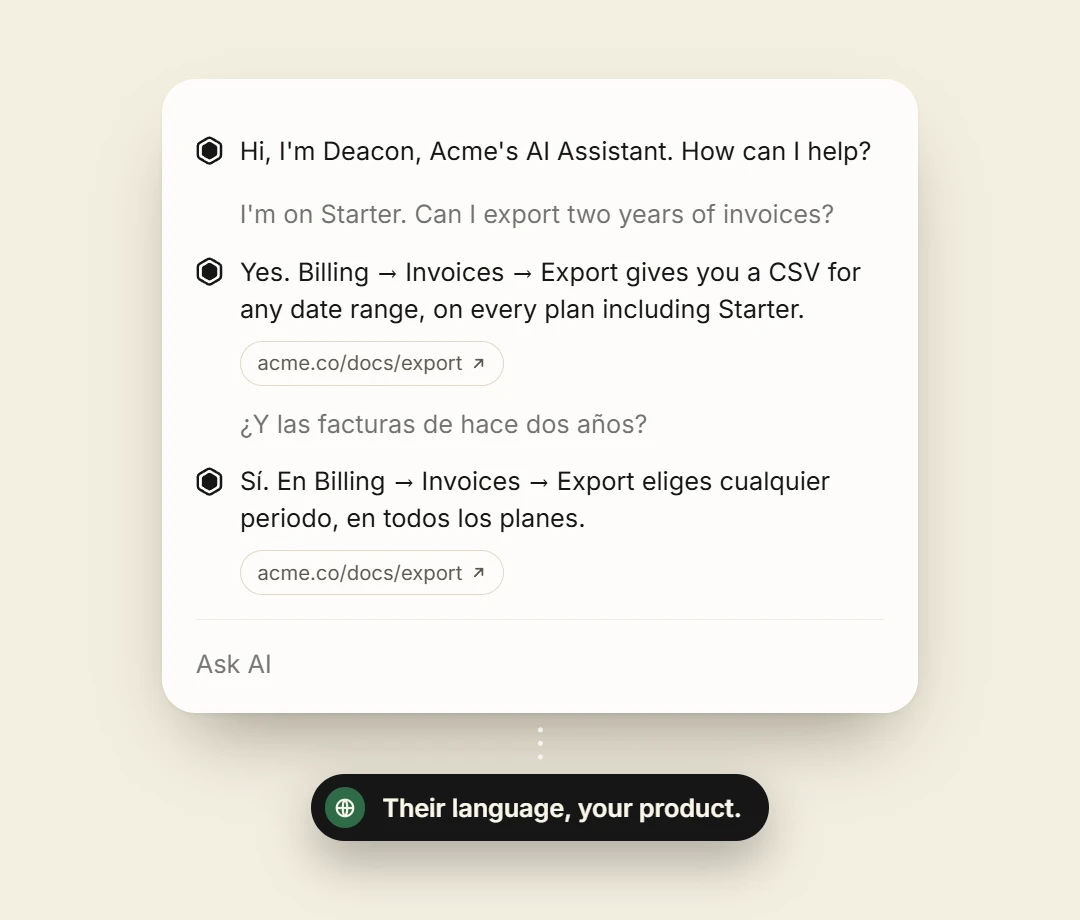
The worst thing a support bot can do is invent a refund policy in front of your customer. Deacon answers only from what your docs say, in seconds and in the language your customer wrote in, often with a link to the page it came from. When your docs don’t cover the question, it says so and asks for their email, so nobody hits a dead end.

  • Written from your docs, not the open web
  • Replies in the language they write in
  • No flows or decision trees to build
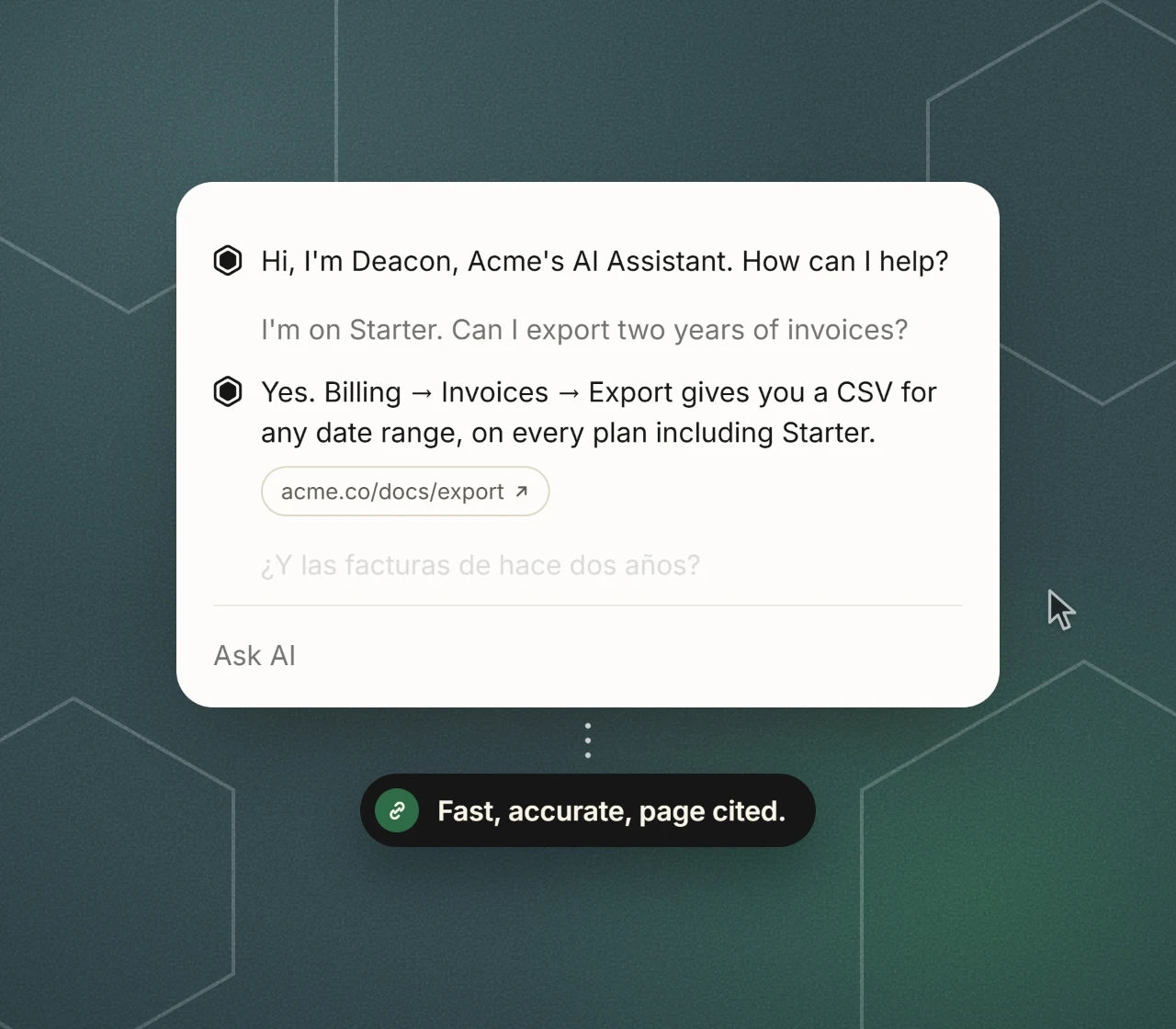
The Deacon widget answering a question about exporting invoices, first in English with a link to the docs page, then the same question asked and answered in Spanish.

Learn what to fix and what to build from what people ask

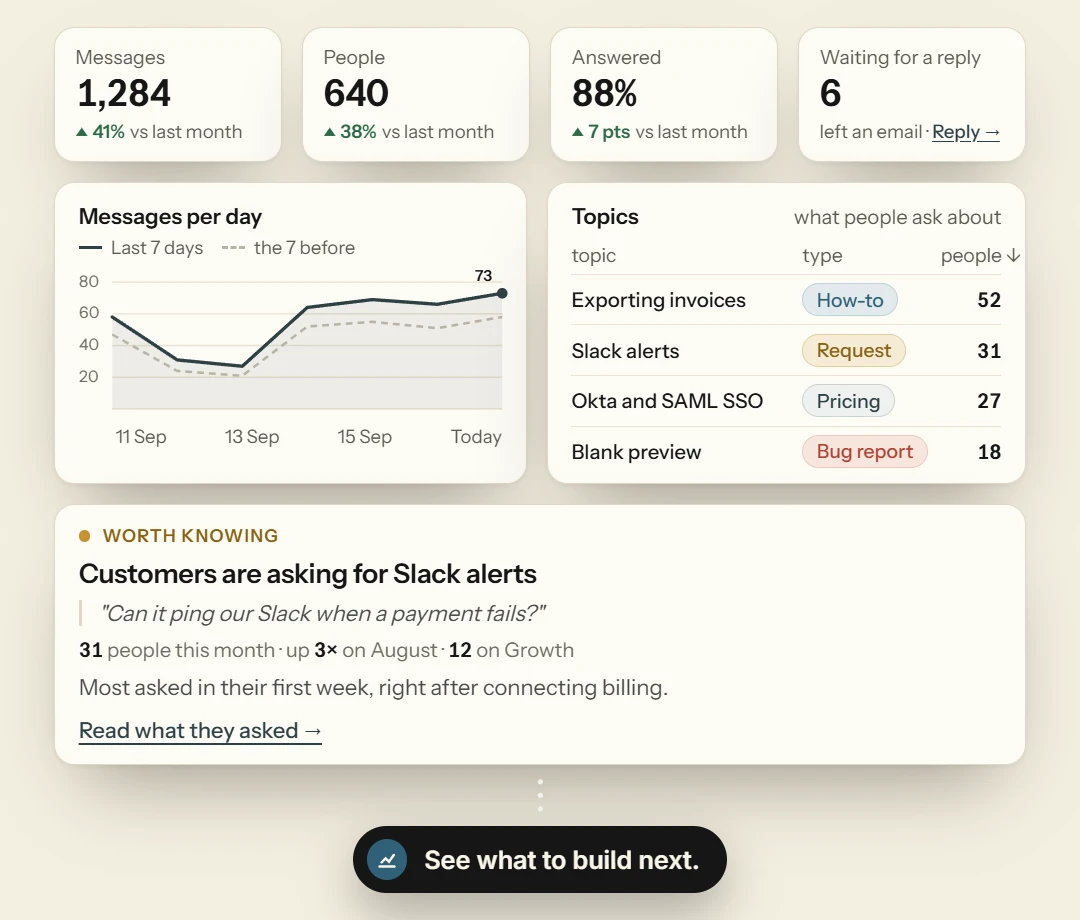
Most founders only hear from the few customers who bother to email. Deacon hears from everyone who asks, and groups their questions into topics with a count. When 27 people ask whether you support single sign-on, it’s at the top of your list. It’s customer feedback you never had to ask for.

  • Every conversation, word for word
  • Topics ranked by how many people asked
  • Website analytics from the same script
What the dashboard shows
The widget analytics dashboard, with tiles for messages, people, the share answered and visitors waiting for a reply, a messages-per-day chart, the topics people ask about, and a finding that customers are asking for Slack alerts.

It only needs you when your docs run out

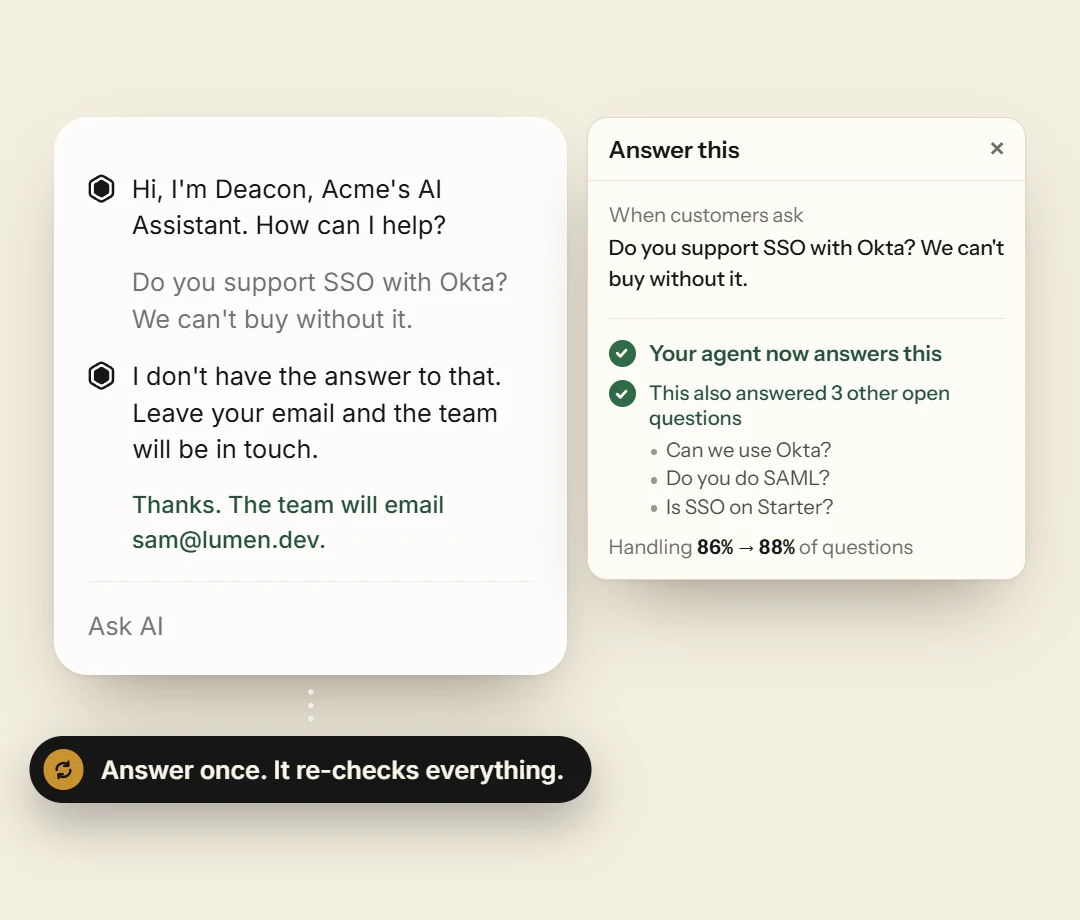
Nobody has to watch the chat, day or night. When a visitor leaves their email or asks for a person, you get an email. Reply from the dashboard, and if they still have the chat open, your reply appears there. Then write the answer once. It becomes part of what Deacon knows, so the more you answer, the less it needs you.

  • Answers 24/7, with nobody on call
  • An email when someone needs you
  • Every answer you write makes it better
How handoff works
A conversation Deacon could not answer, with the visitor’s email taken, beside the Answer this panel where the founder’s reply is saved and marked as now answering this and three other open questions.

Every feature, on every plan, even the free one

  • Honest answers Written from what your content says, or Deacon tells the visitor it doesn’t know.
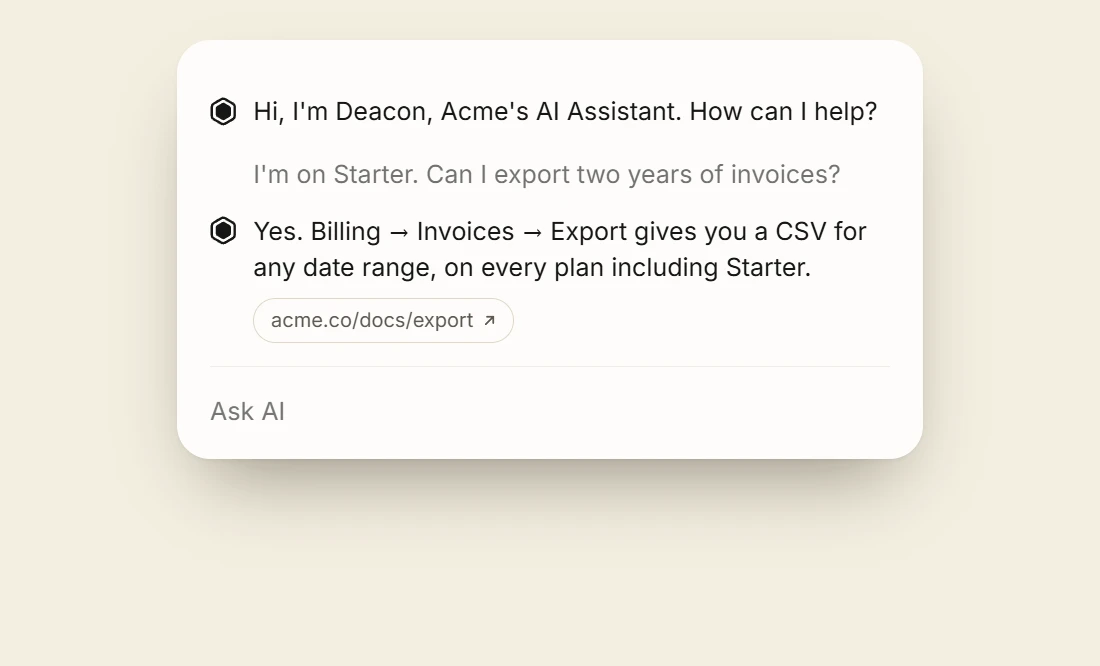
    The widget answering a question about exporting invoices, with a link to the docs page the answer came from.
  • Answer once Every answer you write becomes part of what Deacon knows, so it keeps getting better.
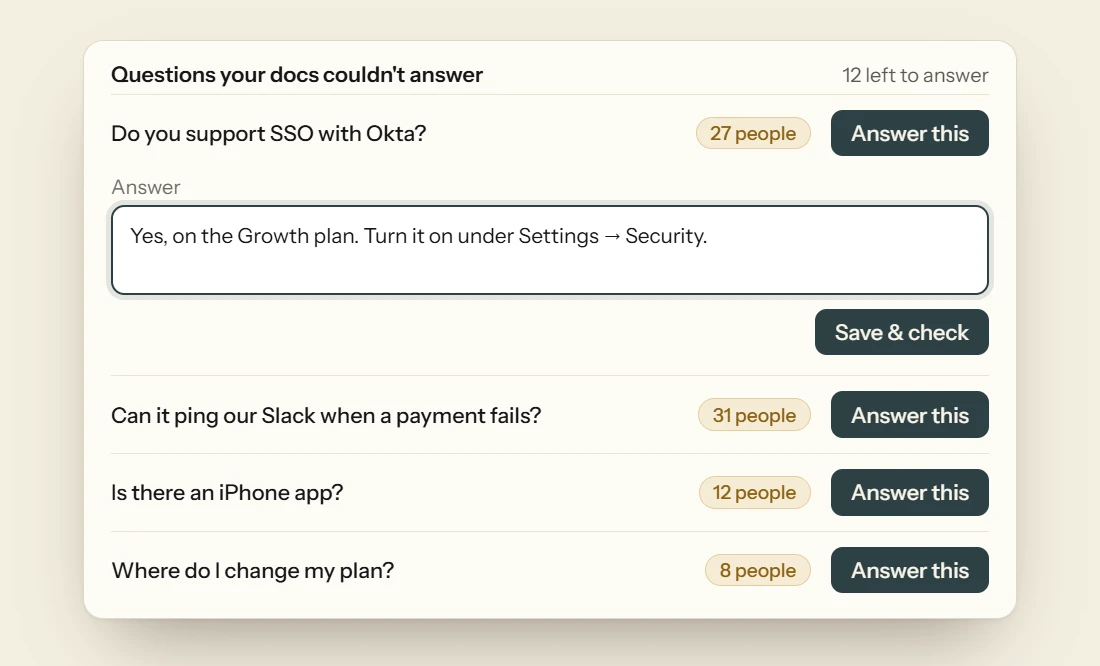
    The questions your docs could not answer, listed with how many people asked each, and a box to write the answer.
  • Conversation logs Every word said on your behalf, searchable by what visitors asked.
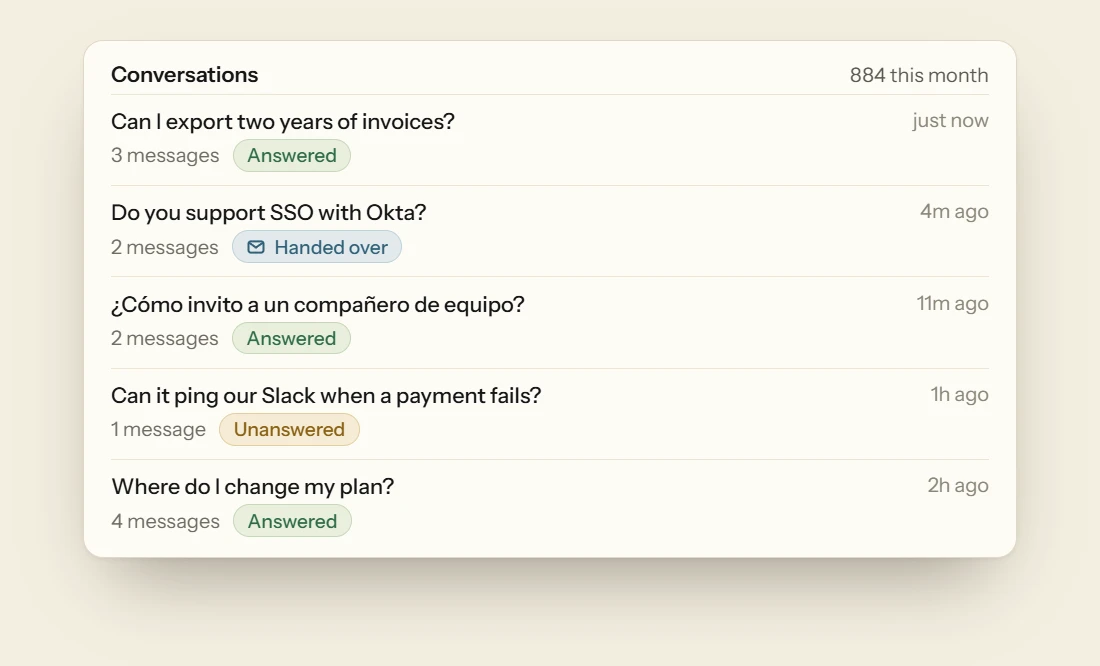
    The list of conversations, each with its question, how many messages it ran to, and whether it was answered, handed over or unanswered.
  • Human handoff Reply from the dashboard, and your words appear in the visitor’s chat.
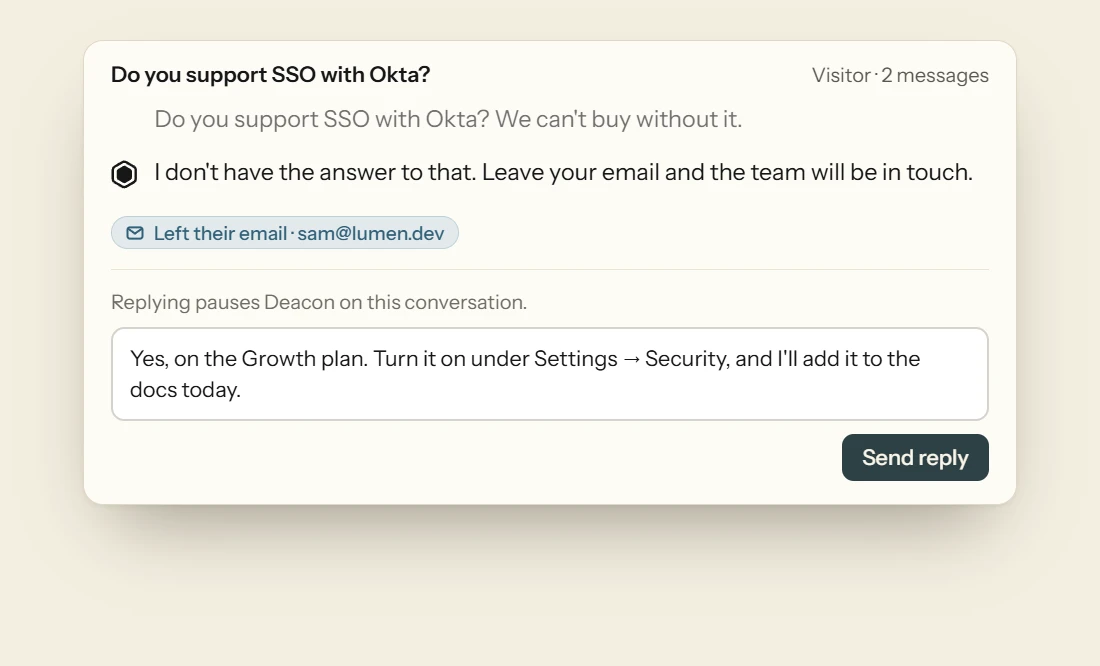
    A handed-over conversation with the visitor’s email, and the founder’s reply being written in the dashboard.
  • Four kinds of source Your website, files, pasted text and answers you write.
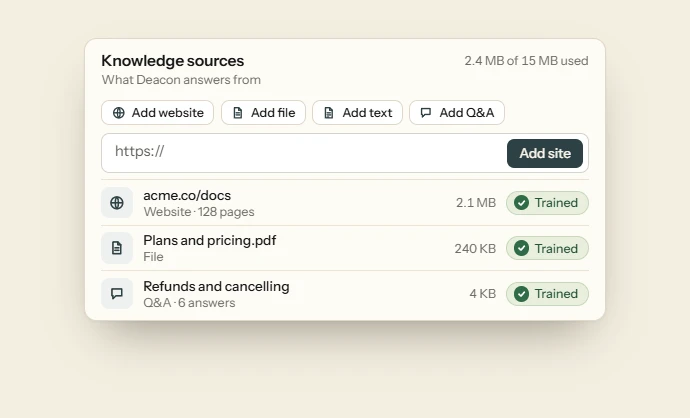
    The knowledge sources a team has added, a crawled website, an uploaded file and written answers, each marked trained, with the buttons to add a website, a file, text or a Q&A above them.
  • Topics Questions grouped by what people were trying to do.
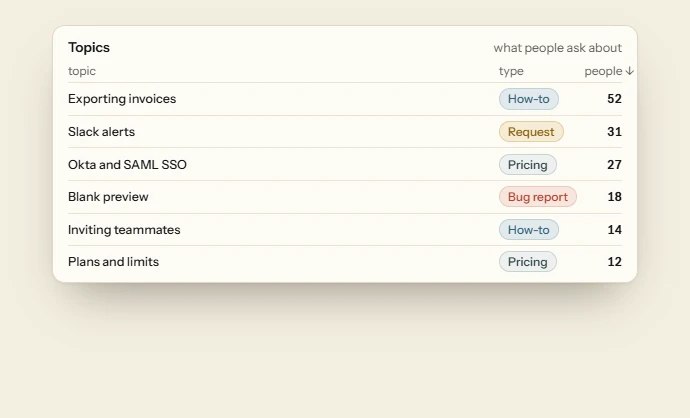
    The topics people ask about, each typed as a how-to, a request, pricing or a bug report, ranked by how many people asked.
  • Website analytics Visitors, sources, goals and funnels, from the same script.
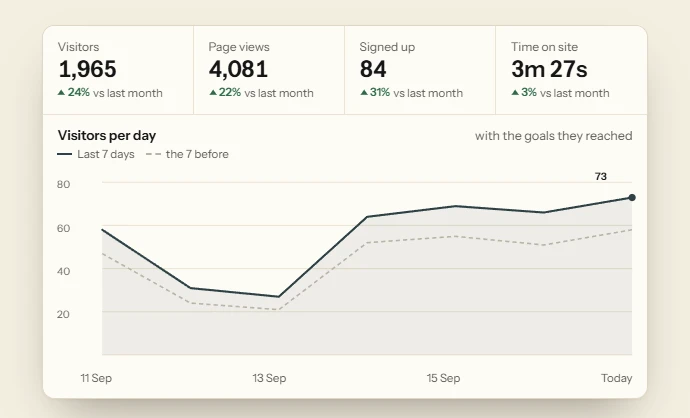
    Website analytics, with visitors, page views, sign-ups and time on site over a chart of visitors per day.

Set up in a few minutes

  1. Your website

    Sign up and give Deacon your website. It can answer from your home page and main pages within a minute or so.

  2. Try it

    See how Deacon answers three questions your customers might ask, from your own pages. Then ask it your own.

  3. Go live

    Paste this one line before </body>, or hand the prompt from the Install page to your coding agent.

    <script src="https://heydeacon.com/widget/v1/loader.js" data-key="pk_your_widget_key" async></script>

Try it on your own site

Sign up, give Deacon your website and ask it your customers’ questions before anyone else sees it. The free plan has no end date, there’s no badge to pay to remove, and no plan ever bills you past its limit.

Free plan, no card.

Questions, answered

It’s conversational AI that answers your customers’ questions in a chat on your site, in seconds and in plain words, from your own content. Deacon is one, built for founders and small teams who handle support themselves. It answers what your docs cover, says so when they don’t, and asks for the visitor’s email so you can reply. Everything people ask is saved and grouped, so you learn what they need. There’s a free plan, and it needs no card.

The customer insights most founders never get. You see what people ask, in their own words, grouped so you can act on it. Topics collect similar questions, count how many people asked and label most of them as a how-to, a feature ask, a bug report, a pricing question and so on. The dashboard shows how many people wrote in, how many got an answer, the languages they wrote in and the pages they asked from. The same script counts your visitors, where they came from and which goals they reach, and a short list called Worth knowing points out what stands out.

It learns from the content you give it, which becomes its knowledge base. That can be your website, a single page, uploaded files (PDF, Word, Markdown, text, CSV or HTML) or text you paste in, plus the answers you write to questions it missed. The first time you add your website, Deacon picks its own pages to learn from, starting with your home page, and you can untick any you’d rather it left out. When a page changes, fetch it again and retrain.

A hallucination is an AI making something up, and it’s the reason many founders don’t trust support bots. Deacon answers only from the passages it finds in your content for each question, not from what the model picked up elsewhere. When those passages don’t cover the question, it says it doesn’t know instead of guessing. An answer taken from a page on your site usually links to that page, so your customers can check it.

It says so in its own words and asks for the visitor’s email. If they leave it, the conversation shows as unread in your dashboard and you get an email, so you can reply. Every question your docs didn’t cover has an Answer this button. Your answer becomes part of what Deacon knows, so it can answer the next person who asks. When you save it, Deacon asks itself the question again, shows you the reply it now gives and tells you how many other open questions your answer covers.

It can take the questions your docs already answer, at any hour, and pass the rest to you. For a founder doing support alone, that means you mostly hear about the questions that need you. Each answer you write for those teaches Deacon, so over time more of your questions are answered without you.

No. Deacon answers questions and hands conversations to you, and it takes no actions in other systems. It won’t issue a refund, change a plan or look up an order, and it always declines questions about a visitor’s own account.

The script takes a few minutes. Give Deacon your website when you sign up, copy the one line it gives you and paste it before </body>, or give your coding agent the prompt from the Install page. Deacon reads your home page and the pages visitors ask about first, like pricing and help, and can answer from them within a minute or so. A file or a single page is ready to answer from as soon as it’s been read, and on a paid plan you can crawl your whole site.

Only to add the script, and a coding agent can do that for you. Adding content, writing answers and reading conversations all happen in the dashboard, and anyone on your team can do them.

It replies in the language the visitor writes in, whatever language your docs are in. A question in Spanish gets a Spanish answer from English docs, with nothing to set up. The widget’s own buttons and labels are in English. In the dashboard, you can translate any conversation into your own language.

There’s a free plan with no card and no end date, and every feature is on every plan, free included. The paid plans give you more answers, more content, more pages from your website and more seats, and there’s no badge to pay to remove on any of them. The figures are on the pricing page.

No. Nothing is ever charged past your plan’s answers, and no plan upgrades itself. If a month’s answers run out, visitors get a short message saying Deacon can’t look into it right now and are asked for their email, unless they’ve already left it. You can still read and reply to every conversation. Every plan answers with the same model, so there are no credits that run out faster on a better one.

No. Deacon doesn’t assume you have a support team or the software one uses. It answers on your site, and when someone needs a person, you reply from the Deacon dashboard. It isn’t a helpdesk itself, so there are no tickets, queues or rotas.

Fin and Decagon are built for companies that already have a support team and a helpdesk. Decagon is sold through a demo, and Fin works alongside a helpdesk. Deacon is built for founders and small teams who have neither. Chatbase and Crisp are closer to it. With Deacon, the free plan has no end date, every feature is on every plan and there’s no badge to pay to remove. The same script also gives you website analytics.

Yes. Every conversation is saved in full, with the source each answer named and the page the visitor was on. You can search them by what visitors asked and filter them by whether they were answered.

Yes. When the script loads, it sets a cookie called deacon_visitor_id and keeps the same id in local storage, so Deacon can tell a returning visitor from a new one. It lasts up to 90 days. Page views are counted without it, from a hash that changes every day.

Not today. Deacon has no integrations or webhooks, and it answers only from the content you add. Your app can pass it details about the visitor, such as their plan, and Deacon takes them into account. If you need more than that, write to us at hello@heydeacon.com.

Something else?